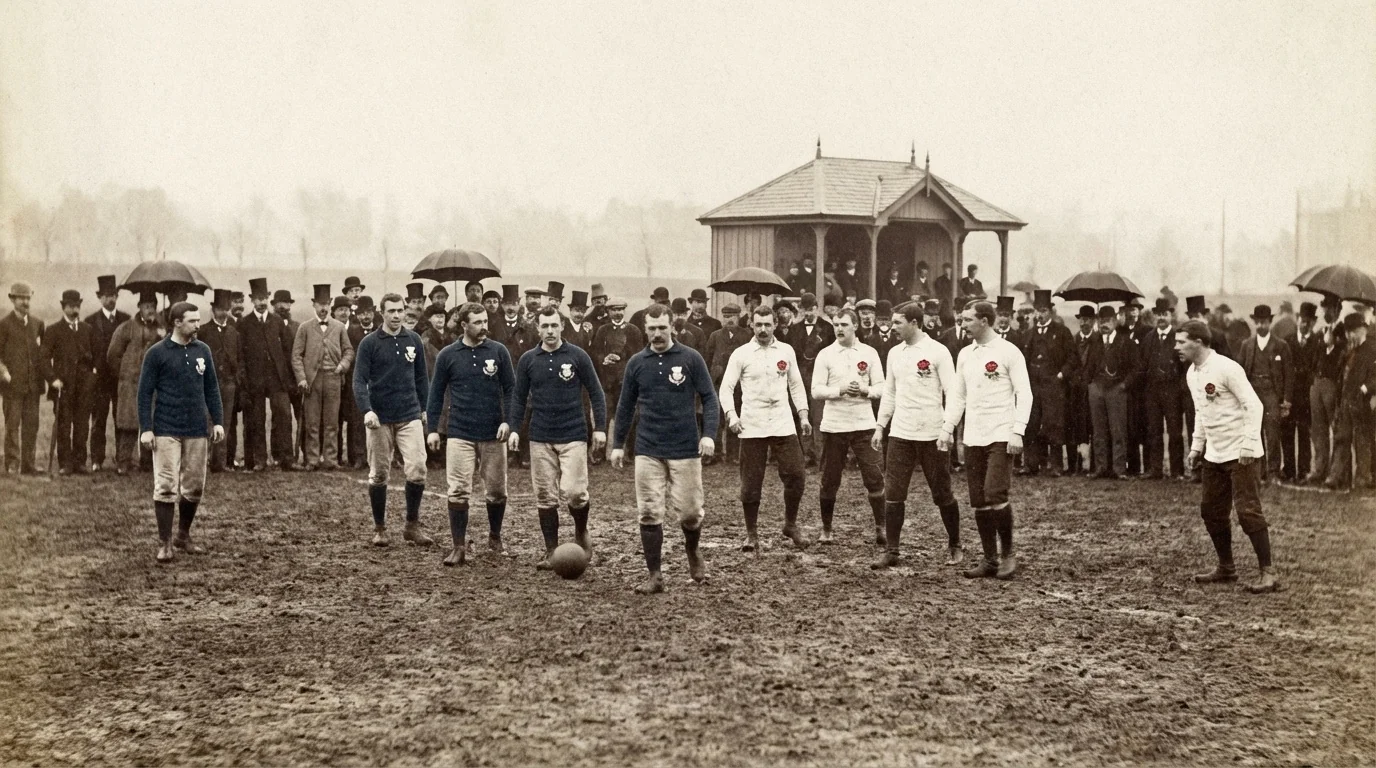
The First International: When Global Football Was Born
The oldest international football rivalry officially began on a cold afternoon on November 30, 1872. In front of 4,000 spectators at Hamilton Crescent in Glasgow, Scotland and England met for what is now recognized as the very first international match. This historic encounter established a prestigious tradition and a competitive spirit that remains the heartbeat of the sport today.

“
The score was nil-nil, but the impact was immeasurable.
The Birth of the Oldest International Football Rivalry
While the scoreline ended in a 0-0 draw, the oldest international football rivalry was immediately defined by a massive clash of tactical philosophies. The English side arrived with a heritage of “dribbling”—a style where individual players surged forward with the ball until dispossessed. Scotland, however, introduced a revolutionary blueprint: the “passing game.” This tactical shift is a key chapter in history, influencing the technical style we see in modern match days. Because the Scottish players were physically smaller than their English counterparts, they relied on precision and teamwork. By moving the ball between teammates, they were able to bypass the physically imposing English defense. This match provided a cinematic first glimpse into the origin of international football, proving that technical skill could triumph over pure physical power.
Kits and Culture: The Aesthetic of 1872
The visual landscape of the oldest international football rivalry was vastly different from the high-tech kits of today. The Scottish team took to the field wearing heavy, dark blue woollen shirts adorned with a hand-stitched thistle crest. Interestingly, many of the players also wore “knickerbockers” and long woolen cowls or hats to combat the biting Glasgow chill.
England countered in all-white attire, featuring the now-iconic Three Lions crest. In an age before standardized footwear, players wore heavy leather boots that became waterlogged and doubled in weight as the match progressed. This physical grit was a testament to the pioneers who sought to define national pride through a leather ball. The atmosphere at Hamilton Crescent was thick with anticipation, yet remarkably civil. There were no segregated stands or chanting sections; instead, the 4,000 fans stood deep along the touchlines, witnessing the birth of a prestigious sporting institution. This communal experience set the tone for over a century of high-contrast international competition.
Tactical Details from Hamilton Crescent
Despite the lack of goals at The Oldest International Football Rivalry, the intensity shown on the rain-soaked turf etched a lasting legacy into the sport’s archives. According to records preserved by the Scottish Football Museum, the conditions were a true test of grit.
The pitch itself was a cricket ground heavily soaked from persistent rain, making precise ball control an incredible structural challenge for every man on the field. Even the physical infrastructure told the story of a burgeoning sport; in 1872, there were no solid wooden crossbars, only a simple tape stretched tightly between the upright posts.
How the ‘Passing Game’ Changed History
The Scottish “combination game” debuted during this match and became the most prestigious export in the oldest international football rivalry. Before this clash, football was largely a game of individual bravery. Scotland’s decision to distribute the ball proved that intelligence could outmaneuver brute force, a lesson that England took to heart in the years following.
This tactical evolution eventually spread across the globe. As Scottish “football missionaries” traveled to South America and Central Europe, they took the lessons learned at Hamilton Crescent with them. The passing style became the foundation for the prestigious “Total Football” and “Tiki-Taka” systems that would dominate the 20th and 21st centuries.
The Global Legacy of the 1872 Clash
The Oldest International Football Rivalry served as a proof-of-concept that fans wanted to see nation against nation in a test of endurance, pride, and strategy. Every modern tournament, from the Euros to the World Cup, can trace its prestigious lineage back to this foggy afternoon in Partick, Glasgow. While tactics have evolved from primitive formations to the complex high-pressing systems of 2026, the fundamental passion of the rivalry remains unchanged.
HISTORIC TRAJECTORY
Frequently Asked Questions
Who won the first ever international football rivalry match?
A hard-fought 0-0 draw
Despite several close chances for both sides in the final minutes, neither team could break the deadlock on the heavy, rain-soaked pitch at Hamilton Crescent.
Why is Scotland vs England the oldest rivalry?
The first officially recognized international
It is recognized as The Oldest International Football Rivalry because the 1872 meeting was the first time two national teams, officially sanctioned by their respective associations, competed on the global stage.




Leave a Reply