World Cup 2026: Complete Guide to Dates, Hosts, Format and Final
“The 2026 FIFA World Cup will redefine the scale of football’s greatest tournament.”
THE MATCH JOURNAL
Overview of World Cup 2026
The World Cup 2026 will be the 23rd edition of the men’s FIFA World Cup, but it will feel like a new era. It is the first edition to feature 48 teams and the first to be hosted by three countries: Canada, Mexico, and the United States. That alone makes it one of the most historically important tournaments FIFA has ever staged.
This edition also brings a major increase in scale. Instead of the 64-match structure used from 1998 through 2022, the tournament will now feature 104 matches. That means more nations, more storylines, more travel, and a longer path to the trophy. For supporters, broadcasters, and national teams alike, World Cup 2026 is not just bigger. It is structurally different.
Because of that, this page works best as your main World Cup 2026 hub. It gives readers the essential overview first, then points them toward the deeper subtopics that matter most, including schedule, host cities, stadiums, teams, and the final itself.
The 48-team format explained
The biggest change in World Cup 2026 is the new format. FIFA has expanded the field from 32 teams to 48, creating the largest tournament in the competition’s history. The event will now use 12 groups of four teams each.
The top two teams from every group will advance automatically, along with the eight best third-placed teams. That creates a new Round of 32 before the traditional round of 16, quarter-finals, semi-finals, and final. In practice, this means more knockout drama and more chances for emerging nations to make history.
For FIFA, the expansion is about global reach as much as football. More places in the finals give more confederations a realistic shot at qualification, which broadens the tournament’s competitive and commercial footprint. For fans, it means nearly six weeks of non-stop football rather than a shorter, tighter schedule.
Host countries and where World Cup 2026 will be played
One of the defining features of World Cup 2026 is its unprecedented geography. For the first time, the men’s tournament will be staged across three countries: Canada, Mexico, and the United States.
Mexico will become the first nation to host or co-host the men’s World Cup three times, after previous editions in 1970 and 1986. The United States returns as host after 1994, while Canada will stage its first men’s World Cup matches at senior level. Together, the three co-hosts give the tournament a continental scale never seen before in FIFA history.
This structure also changes the travel conversation. Matches will be spread across multiple regions and time zones, but FIFA has designed the schedule with travel management in mind. That matters because a tournament this large could easily become chaotic without careful regional balance.
Key dates: opening match, knockout rounds and final
A major question fans ask is simple: when is World Cup 2026? The tournament returns to the traditional Northern Hemisphere summer window after the winter scheduling of Qatar 2022.
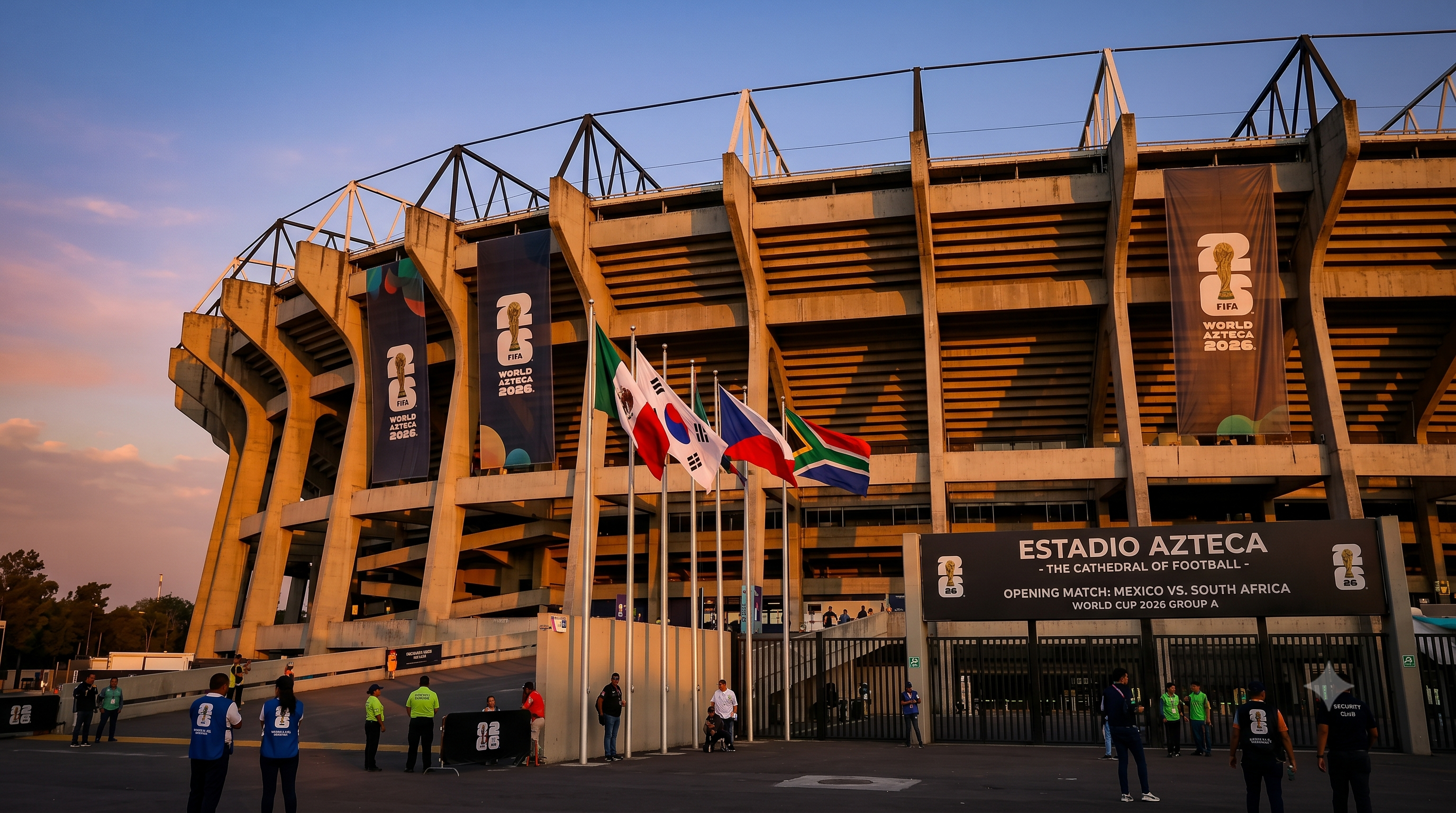
The opening match is set for 11 June 2026 in Mexico City, while the final is scheduled for 19 July 2026 in New York New Jersey. That gives the tournament a 39-day span, longer than previous editions because of the expanded format and match count.
Those dates matter beyond football fans. Domestic leagues, broadcasters, sponsors, and travel planners all build around the World Cup calendar. Once the opening match begins, the tournament will quickly dominate the global sporting conversation until the trophy is lifted in July.
Host and stadium overview
The tournament will be played across 16 host cities, the most since the 2002 World Cup. Eleven are in the United States, three are in Mexico, and two are in Canada. This broad host map reflects both the size of the tournament and FIFA’s push to make the event feel continental rather than national.
| Country | Host Cities | Key Venue Naming |
|---|---|---|
| USA | Atlanta, Boston, Dallas, Houston, Kansas City, Los Angeles, Miami, New York New Jersey, Philadelphia, San Francisco Bay Area, Seattle | New York New Jersey Stadium |
| Mexico | Mexico City, Guadalajara, Monterrey | Mexico City Stadium |
| Canada | Toronto, Vancouver | Toronto Stadium / BC Place Vancouver |
The United States will host the majority of matches, including the final, while Mexico and Canada give the tournament historic depth and regional balance. For readers planning future travel or following city-specific updates, this is where the World Cup 2026 story becomes practical as well as historical.
What else to know about World Cup 2026
As a pillar page, this guide covers the big picture first. But World Cup 2026 is large enough to deserve its own subtopics. Readers will usually want more detail on the full match schedule, stadiums, host cities, ticket information, group-stage layout, and qualified teams.
That means this page should act as the central entry point for your 2026 cluster. Future supporting articles can cover:
- World Cup 2026 host cities and stadiums
- World Cup 2026 schedule and fixtures
- World Cup 2026 final venue and opening match
- World Cup 2026 qualified teams and qualification paths
- World Cup 2026 tickets and travel planning
By keeping this article broad and authoritative, you make it easier for both readers and search engines to understand where the rest of the 2026 topic ecosystem begins.
Frequently Asked Questions
When is the World Cup 2026 final?
The final is scheduled for 19 July 2026 in New York New Jersey.
Where will the opening match of World Cup 2026 be played?
The opening match will be played in Mexico City on 11 June 2026.
How many teams will play in World Cup 2026?
A total of 48 teams will compete, up from 32 in previous editions.
How many host cities are there for World Cup 2026?
There will be 16 host cities across Canada, Mexico, and the United States.
FIFA World Cup Records: Goals, Appearances & Historic Milestones