
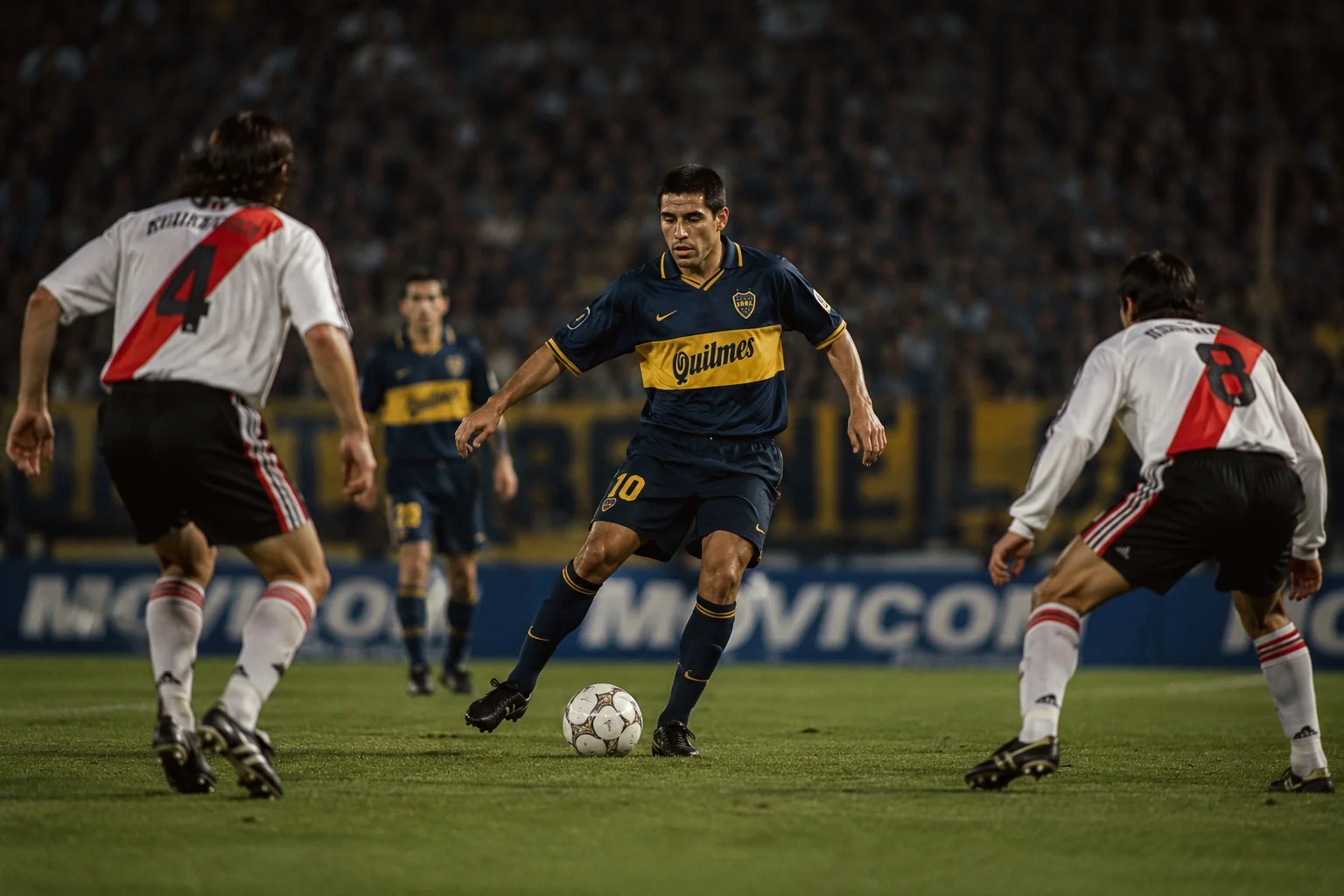
Football has produced many creative positions throughout its history, but few are as iconic as the enganche. Deeply rooted in South American football culture, the enganche serves as the team’s creative brain, orchestrating attacks and supplying forwards with scoring opportunities.
What Is an Enganche in Football? Role, Position & Famous Examples
While modern tactical systems have become increasingly structured, the enganche remains one of football’s most fascinating playmaking roles.

What Is an Enganche in Football?
An enganche is a creative attacking playmaker who operates behind the forwards and serves as the primary source of creativity in a team. The term comes from Spanish and translates roughly to “hook” or “link.” An enganche links midfield and attack, receiving possession in advanced areas before creating opportunities for teammates through passing, vision, and technical ability. The role became particularly famous in Argentina and South America, where teams often built their entire attacking system around a single gifted playmaker.
What Does Enganche Mean?
The word enganche literally means “hook” in Spanish. In football, the term describes a player who “hooks” together different phases of play, connecting midfield possession with attacking opportunities. The enganche often becomes the absolute focal point of the team’s offensive structure, acting as the main gateway through which all transition passing must flow.
Enganche Position Explained
An enganche usually operates directly behind the striker, perfectly positioned between midfield and attack in central zones. Their typical station is deep within the pockets between the opposition’s midfield block and defensive backline. Unlike a traditional central midfielder who builds possession from deep, the enganche spends most of their time in advanced areas where their technical qualities can immediately unlock defensive lines.
What Does an Enganche Do?
The enganche dictates the pace and direction of the attack. Once possession reaches the final third, they assume full control over decision-making:
- Creates Chances: Delivers defense-splitting passes, slide-rule through-balls, and intricate lay-offs to strikers.
- Controls Attacking Play: Serves as the primary operational terminal for almost every offensive sequence.
- Finds Space Between the Lines: Masters the art of hovering in pockets where defenders hate to step out and tracking midfielders lose their marking.
- Supplies Forwards: Constantly monitors off-the-ball movements, supplying forwards making sharp runs into the box.
“
“The enganche does not run to find space. Space finds the enganche.”
Enganche vs. Trequartista
These two classic playmaking roles are often compared because they share similar real estate on the pitch, but their structural execution reflects different tactical heritages.
Enganche vs. Traditional Number 10
The enganche is best understood as a highly specialized, purist subset of the traditional number 10. While a standard modern “number 10” encompasses a wide range of attacking midfield profiles—including dynamic runners, shadow strikers, and pressing midfielders—the enganche is strictly a passing orchestrator. They focus entirely on ball progression, spatial calculation, and chances created rather than tracking back or making direct attacking runs into the box. In short: not every number 10 is an enganche, but every enganche is a number 10.
Famous Enganche Players
Juan Román Riquelme
Riquelme is universally celebrated as the ultimate, definitive enganche of the modern era. His unmatched vision, passing range, ball-shielding strength, and absolute control over match tempo made him the perfect manual for the position during his legendary spells with Boca Juniors and Argentina.
Diego Maradona
The legendary maestro frequently functioned as a classic enganche, utilizing raw creative audacity, low-gravity balance, and technical brilliance to single-handedly direct games from the central final third.
Ariel Ortega
Dubbed El Burrito, Ortega embodied the untamed street creativity of the position. His close control and evasive dribbling allowed him to draw defenders in before unlocking shapes with precise distribution.
Pablo Aimar
Admired heavily for his elegance, agility, and split-second cognitive processing, Aimar became one of South America’s most respected attacking minds, sliding passes through tight channels seamlessly.
What Makes a Great Enganche?
Fulfilling this traditional playmaking role requires an elite, calculated blend of technical parameters:
- Panoramic Vision: The supreme cognitive ability to map out attacking lanes before they physically develop.
- Precision Passing: Exceptional weight of pass to drop balls perfectly into the path of running forwards.
- Innovative Creativity: Consistently executing inventive solutions to breakdown highly compact defensive blocks.
- Elite Shield Control: World-class close control and physical shielding to harbor possession inside congested zones.
- Flawless Decision-Making: Selecting the exact micro-second to release the ball to optimize the scoring chance.
Advantages and Disadvantages of the Enganche
The Advantages
- Generates highly structured numerical overloads on the flanks alongside wingers.
- Substantially improves vertical ball progression paths across intermediate zones.
- Adds a highly dangerous, unpredictable scoring threat via late-arriving box runs.
- Enhances overall team positional fluidity and structural flexibility.
The Disadvantages
- Can trigger structural defensive limitations if the mezzala lacks physical tackling size.
- Leaves central midfield zones heavily exposed if caught high during a counter-turnover.
- Maintains a total reliance on highly disciplined, positionally aware supporting teammates.
- Demands an exceptionally rare technical profile that few standard central midfielders possess.
Is the Enganche Still Relevant Today?
Although modern elite football has heavily evolved toward intense athletic systems, aggressive collective counter-pressing, and strict positional play, elements of the enganche framework still endure. Many contemporary playmakers continue to hunt for space between lines, deliver defense-splitting keys, and dictate attacking rhythms. While the unadulterated, purely static traditional enganche is rare in a landscape obsessed with physical metrics, the foundational principles of deep footballing vision and technical control remain highly influential.
Frequently Asked Questions
What is an enganche in football?
An enganche is a classic attacking central playmaker tasked with connecting midfield lines with advanced forwards while operating as the primary creative conductor of the squad.
What does the term enganche literally mean?
The Spanish concept translates literally to “hook,” structurally outlining a player who links midfield transition play with final-third scoring opportunities.
Is an enganche exactly identical to an Italian trequartista?
They share structural space but carry separate stylistic traits. An enganche is a classic South American concept favoring a more central, calculated passing station, whereas a trequartista stems from Italian roots and prioritizes fluid lateral roaming across the attacking third.
Who stands as the greatest modern example of the role?
Argentine icon Juan Román Riquelme is universally recognized by tactical historians as the absolute blueprint and greatest modern personification of the classic enganche role.