
The 2026 FIFA World Cup mascots are Maple the Moose, Zayu the Jaguar and Clutch the Bald Eagle. For the first World Cup hosted by Canada, Mexico and the United States, FIFA has chosen three mascots instead of one.
2026 FIFA World Cup Mascots Explained: Meet Maple, Zayu And Clutch
The 2026 FIFA World Cup mascot story is different from the usual tournament formula. Most World Cups have one main character. This edition has three, each tied to one of the host nations: Maple the Moose for Canada, Zayu the Jaguar for Mexico and Clutch the Bald Eagle for the United States.
That makes sense for a tournament built around scale. World Cup 2026 is the first men’s edition with 48 teams and the first to be co-hosted by three countries. The mascot system follows that same idea: bigger tournament, bigger cast, broader identity. But mascots are not just cute side characters. They are part of the branding machine. They appear on merchandise, fan festival material, social content, children’s products, video games and stadium activations. They are how a tournament turns into something softer, more playful and easier to remember.

What Is The 2026 FIFA World Cup Mascot?
The 2026 FIFA World Cup mascot is not one character. It is a trio: Maple the Moose, Zayu the Jaguar and Clutch the Bald Eagle.
Each mascot represents one host country. Maple represents Canada, Zayu represents Mexico and Clutch represents the United States. Together, they create a three-part identity for a World Cup that is spread across North America.
The three mascots also carry different football personalities. Maple is linked with Canada’s calm strength and creative spirit, Zayu brings speed, energy and cultural pride from Mexico, while Clutch is built around leadership, movement and the unifying energy of the United States.
Why Are There Three 2026 World Cup Mascots?
There are three 2026 World Cup mascots because the tournament itself has three host nations. Canada, Mexico and the United States are sharing the event, so FIFA has given each country its own character.
This is a branding decision as much as a symbolic one. A single mascot would have had to represent an enormous, complex tournament across three very different football cultures. A trio gives FIFA more flexibility. Each host gets its own visual identity, while the three characters still work together as one tournament family.
It also fits the commercial shape of modern football. Three mascots mean three personalities, three merchandise lines, three sets of fan favourites and more room for digital storytelling. In mascot terms, it is less of a solo act and more of a continental band.
Maple The Moose: Canada’s 2026 World Cup Mascot
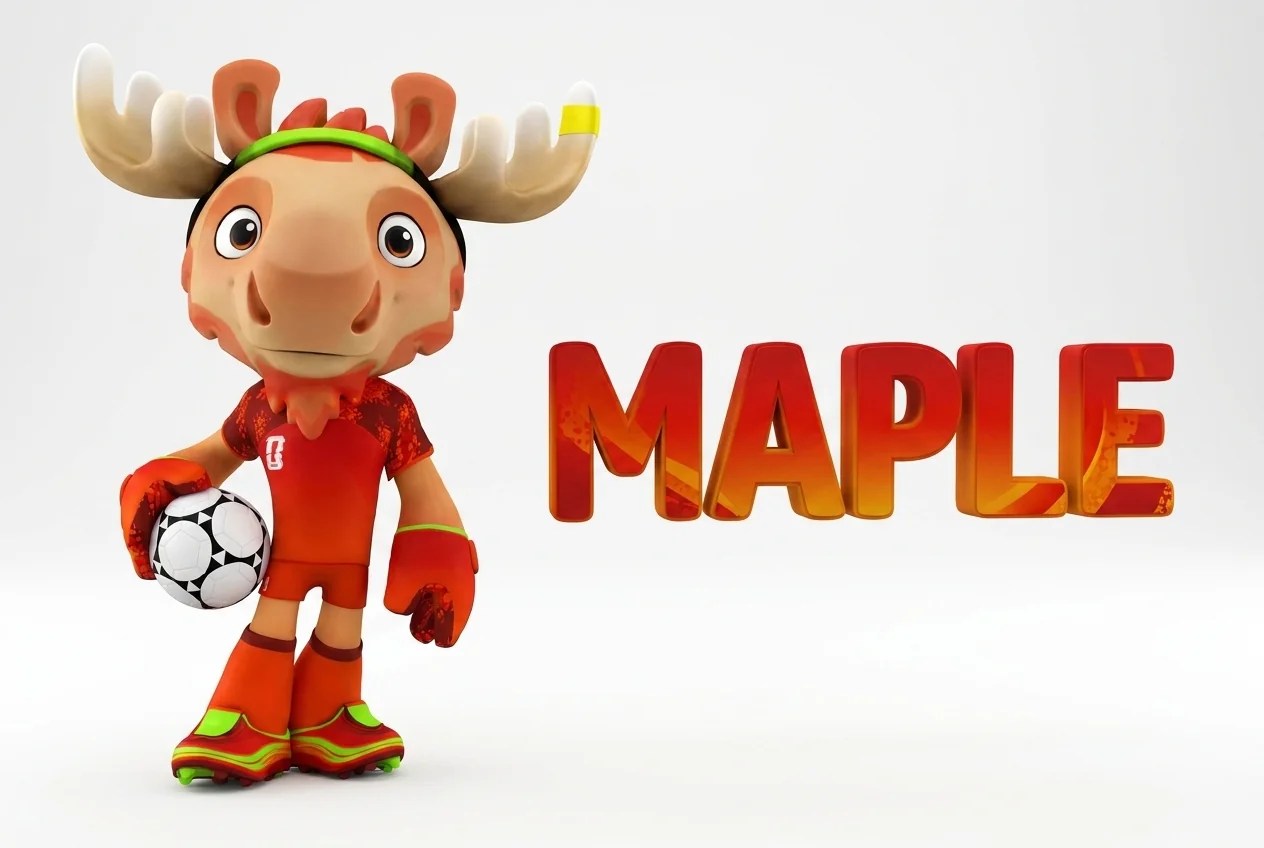
Maple the Moose is the official Canada mascot for the 2026 FIFA World Cup. The choice is direct and easy to read: the moose is one of Canada’s most recognisable animals, while the name Maple naturally connects to the maple leaf, one of the country’s strongest national symbols.
Maple’s role is to bring Canada’s part of the tournament into the mascot system. The character is built around qualities such as resilience, creativity and calm strength. In football language, Maple feels like the steady presence in the trio: reliable, grounded and difficult to move.
Canada is not just appearing on the tournament map. It is helping host the biggest edition of the competition, with cities, stadiums and fans becoming part of the global football stage.
TMJ Read
Maple works because the idea is simple. Moose, maple, Canada. It is not subtle, but mascots rarely need to whisper. They need to be instantly readable from a sticker, a plush toy or a stadium screen.
Zayu The Jaguar: Mexico’s 2026 World Cup Mascot

Zayu the Jaguar is the official Mexico mascot for the 2026 FIFA World Cup. Of the three mascots, Zayu may be the one with the strongest football energy on paper. A jaguar immediately suggests speed, sharpness, agility and danger.
The animal choice also carries cultural weight. Jaguars have deep significance across parts of Mexican and Mesoamerican heritage, making Zayu more than just a fast-looking character. The mascot connects Mexico’s World Cup role to history, nature and identity.
In football terms, Zayu feels like the attacker of the group. The character gives the trio motion and bite. Where Maple feels steady, Zayu feels explosive. That matters because Mexico has one of the loudest and most established World Cup cultures of the three host nations.
TMJ Read
Zayu is probably the most naturally football-coded mascot of the trio. A jaguar already feels like a forward: quick feet, sharp instincts, one look at goal and the whole back line starts hearing drums.
Clutch The Bald Eagle: United States’ 2026 World Cup Mascot

Clutch the Bald Eagle is the official United States mascot for the 2026 FIFA World Cup. The bald eagle is an obvious national symbol, but the name does extra work. “Clutch” is a sports word. It suggests performing under pressure, stepping up late and delivering when the moment gets loud.
That makes Clutch feel built for the American sports market. The character is energetic, confident and easy to translate into highlight reels, merchandise and fan festival moments. If Maple is steady and Zayu is sharp, Clutch is the connector: loud enough for the stadium, polished enough for the brand campaign.
For the United States, the mascot also speaks to the country’s role in making the 2026 World Cup feel huge. The US will host many of the tournament’s biggest commercial and broadcast moments, so Clutch gives that side of the event a clear visual character.
TMJ Read
Clutch is the most obviously engineered of the three names, but that is also why it works. It sounds like a mascot, a slogan and a sports-broadcast catchphrase all folded into one shiny package.
What The Mascots Say About World Cup 2026
The 2026 FIFA World Cup mascots tell us a lot about the tournament’s overall identity. This World Cup is not being sold as one place with one visual mood. It is being sold as a huge, shared event across a continent.
That is why the mascot trio feels important. Maple, Zayu and Clutch are not just character designs. They are a soft entry point into the tournament’s bigger branding idea: three countries, one competition, many fan cultures.
The decision also shows how World Cup mascots have changed. Older mascots often felt like quirky national icons. Modern mascots have to do more. They need to work on social media, in video games, on merchandise, in fan zones, on children’s products and across broadcast campaigns. In that sense, Maple, Zayu and Clutch are not only mascots. They are content characters. They give FIFA a way to make the tournament feel friendlier, more collectable and more accessible for younger fans.
TMJ Verdict: Three Mascots For One Giant World Cup
The 2026 FIFA World Cup mascot system is a smart fit for this tournament. One mascot may have felt too small for a World Cup stretched across Canada, Mexico and the United States. Three mascots give the event more balance and allow each host nation to carry its own character.
Maple is the cleanest national symbol. Zayu has the strongest football personality. Clutch feels the most commercially tuned. Together, they form a trio that reflects the shape of the 2026 World Cup: broad, energetic, highly marketable and designed for more than just the matches.
Are they instant mascot classics? Maybe not yet. But if the tournament delivers the moments FIFA hopes for, Maple, Zayu and Clutch could become the character stamps of the biggest World Cup ever.
Frequently Asked Questions
What is the 2026 FIFA World Cup mascot?
The 2026 FIFA World Cup mascot is a trio of characters: Maple the Moose, Zayu the Jaguar and Clutch the Bald Eagle.
Who are the 2026 FIFA World Cup mascots?
The mascots are Maple the Moose for Canada, Zayu the Jaguar for Mexico and Clutch the Bald Eagle for the United States.
Why does the 2026 World Cup have three mascots?
The 2026 World Cup has three mascots because the tournament is being hosted by three countries: Canada, Mexico and the United States.
Which mascot represents Canada?
Maple the Moose represents Canada at the 2026 FIFA World Cup.
Which mascot represents Mexico?
Zayu the Jaguar represents Mexico at the 2026 FIFA World Cup.
Which mascot represents the United States?
Clutch the Bald Eagle represents the United States at the 2026 FIFA World Cup.
Are Maple, Zayu and Clutch official FIFA mascots?
Yes. Maple, Zayu and Clutch are the official mascots for the FIFA World Cup 2026.